Washington DC is one of those cities where it would be very easy to spend your days rushing from one famous monument to another. But some of my favourite memories of the city came from doing almost the opposite.
I stayed with a friend who lives in Washington, which meant experiencing the city at a gentler pace. We wandered through museums and sculpture gardens, explored neighbourhoods such as Georgetown, spent almost an entire day at Hillwood Estate and crossed the Potomac to Alexandria.
And, of course, food was very much part of the experience too.
Washington surprised me. Beyond the politics, monuments and imposing government buildings, I discovered a city filled with art, beautiful architecture, gardens, interesting neighbourhoods and some very good places to eat.
Rather than trying to give you a list of everything there is to see in Washington DC, these are the places I particularly enjoyed and how I would combine them to create a slower, more enjoyable few days in the city.
My 4 Day Washington DC Itinerary at a Glance
Four days gives you enough time to experience Washington without rushing from one monument to the next. This is how I would combine my favourite museums, gardens, neighbourhoods and food experiences into a slower 4 day Washington DC itinerary.
| Day | My suggested itinerary |
|---|---|
| Day 1 | National Mall, National Gallery of Art, Sculpture Garden & Hirshhorn |
| Day 2 | Hillwood Estate, Museum & Gardens + lunch at Merriweather Café |
| Day 3 | Freer Gallery, Renwick Gallery, monuments & dinner |
| Day 4 | Georgetown → boat along the Potomac → Old Town Alexandria → Ada’s on the River |
Day 1: Art, Sculpture & the National Mall
Start with a guided tour of the National Gallery of Art or concentrate on the galleries that genuinely interest you rather than trying to see everything.
See the Calder works and monumental mobile in the East Building, head up to the Roof Terrace and then wander through the Sculpture Garden.
From there, continue along the National Mall towards the Washington Monument and Lincoln Memorial.
Day 2: Hillwood & a Long Lunch
Dedicate the morning to Hillwood Estate, Museum & Gardens. Explore the house, wander through the gardens and stay for lunch at the Merriweather Café.
Keep the afternoon relatively free. You have already had a full experience.
You don’t necessarily need another museum. In the evening, head to Tiger Fork for dinner. You can also check out the fun graffitis along the way.


Day 3: Smaller Museums & The Wharf
Visit the Renwick Gallery, followed by the Freer Gallery and Whistler’s Peacock Room.
Continue towards the National Mall, stopping to see the architecture of the National Museum of the American Indian, and visit the Hirshhorn if you still feel like seeing more art.
Finish the day at The Wharf with oysters beside the water.
Day 4: Georgetown to Alexandria
Spend a slow morning exploring Georgetown and make your way towards the waterfront.
Take the boat along the Potomac to Old Town Alexandria, wander through its historic streets and finish with a meal at Ada’s on the River.
It’s a day where the journey is just as important as the destination.
Planning your own trip to Washington DC?
I create personalised journeys built around what you enjoy, with time to slow down, savour more and reconnect.
Discover my Personalised Journey Design
Washington DC Is a City to Explore on Foot
One of the things I hadn’t necessarily expected about Washington was just how much we would walk.
Like New York, Washington is a city where walking becomes part of the experience. Of course, the two cities feel completely different. New York is dense, vertical and constantly moving, while Washington feels more open, with broad avenues, green spaces and monumental architecture.
But in both cities, some of the best moments happen between the places you’ve planned to visit.
In Washington, we walked between museums and monuments, through sculpture gardens and residential neighbourhoods, along the waterfront and around Georgetown. It gives you time to notice the architecture, come across sculptures you weren’t looking for and discover places you might have missed if you’d simply travelled from one attraction to the next.
So bring comfortable shoes and don’t overfill your days. The distances around the National Mall in particular can be deceptive, and you’ll probably walk much further than you expect.
My Favourite Museums in Washington DC
One of the great pleasures of Washington is its extraordinary collection of museums, many of which are free to visit.
But with so much choice, my advice is not to try to see them all.
Choose the museums that genuinely interest you, spend time with the works that catch your attention and leave room for a garden, a leisurely lunch or simply sitting somewhere beautiful.
Perhaps unsurprisingly, some of my favourites were the museums where art spilled outside into courtyards, gardens and sculpture parks.
National Gallery of Art
If I had to choose one museum for a first visit to Washington, the National Gallery of Art would be very high on my list.
There are actually two very different experiences here. The classical West Building contains European and American art, while I. M. Pei’s striking East Building is dedicated to modern and contemporary art.


The collection is enormous, so don’t try to see everything.
In the East Building, one of my highlights was Alexander Calder. His enormous mobile hangs above the light-filled atrium and the museum also has an impressive collection of his work.
Then head upwards to the Roof Terrace. Art, architecture and views come together here and it gives you another reason not to rush through the museum.


Outside, the National Gallery’s Sculpture Garden continues the experience, with large-scale works by internationally renowned artists.


This was one of the things I particularly loved about Washington’s museums. You don’t necessarily have to choose between spending the afternoon inside a museum or outside in the sunshine. You can do both.
Choose the galleries that interest you rather than trying to cover the entire museum, then give yourself time for the Sculpture Garden afterwards. I chose the East Gallery with the Modern and Contemporary Art.
4th St NW, Washington, DC 20565
Freer Gallery, National Museum of Asian Art
The Freer Gallery, part of the Smithsonian’s National Museum of Asian Art, was another favourite and has a completely different atmosphere.
It feels quieter and more intimate than some of Washington’s enormous museums, which made me want to linger.
One of the treasures here is James McNeill Whistler’s extraordinary Peacock Room, originally created in London in the 1870s.
Whistler transformed an entire dining room into a harmony of blue and gold, covering the walls, shutters and ceiling with peacock-inspired decoration. The room was eventually acquired by collector Charles Lang Freer and later moved to Washington.
Today, its shelves are once again filled with ceramics, creating an extraordinary contrast against the rich colours of the room.


It is one of those museum rooms where the interior itself becomes the work of art. Don’t just look at what’s displayed on the shelves. Look at the walls, ceiling, colours and details surrounding you.
The Freer also has a lovely courtyard, another little pocket of calm in the middle of Washington.
1050 Independence Ave SW, Washington, DC 20004
Hirshhorn Museum and Sculpture Garden
If you enjoy modern and contemporary art, add the Hirshhorn to your list.
Even before going inside, the building makes an impression. The circular structure, designed by architect Gordon Bunshaft, looks almost like an enormous piece of sculpture itself.
The museum is part of the Smithsonian and focuses on modern and contemporary art.


One work immediately caught my attention: Yayoi Kusama’s yellow pumpkin, covered in her unmistakable black polka dots.


It instantly transported me back to Japan and my visit to Naoshima, Japan’s contemporary art island, where Kusama’s pumpkins have become symbols of the island’s extraordinary relationship with contemporary art.
I love these little connections when travelling. You see a work of art thousands of kilometres away from where you first encountered the artist and suddenly you’re reminded of another place, another trip and another moment.
And, once again, there is a sculpture garden.
I seem to gravitate towards museums with gardens wherever I travel, and I love being able to move between an indoor exhibition and art outside. It changes the rhythm of a museum visit completely and gives you a chance to pause before heading into another gallery.
Independence Ave SW &, 7th St SW, Washington, DC 20560
Renwick Gallery
The Renwick Gallery was perhaps one of the loveliest surprises of our trip.
Only a short walk from the White House, it is part of the Smithsonian American Art Museum and focuses on contemporary craft and decorative art.
When we visited, we were practically alone.


After some of Washington’s larger museums, there was something wonderful about having the galleries almost to ourselves. It also isn’t overwhelmingly large, so you can actually enjoy the collection without feeling you need several hours to do it justice.
Sometimes the smaller museums are the ones that stay with you.
1661 Pennsylvania Ave NW #1, Washington, DC 20006
National Museum of the American Indian
Even if you don’t have time for another full museum visit, I would stop at the National Museum of the American Indian simply to see the building.
The interior features sweeping curvilinear forms (Potomac Atrium) with virtually no straight walls, intended to reflect natural landscapes sculpted by wind and water.


The landscape is also an important part of the design, reinforcing the connection between the building and the natural world.
Sometimes architecture alone is reason enough to walk through the door.
4th St SW, Washington, DC 20560
Spend Half a Day at Hillwood Estate, Museum & Gardens
Hillwood Estate was one of my favourite discoveries in Washington and offers a completely different experience from the museums around the National Mall.
The former home of Marjorie Merriweather Post combines decorative arts, beautifully preserved interiors and extensive gardens.
This isn’t somewhere I would squeeze between two other attractions.
Give it time.


Wander through the house, look at the collections and then go outside and explore the gardens. We visited when the azaleas were flowering, creating great sweeps of pink, red and white around the grounds.


And rather than leaving to find somewhere else to eat, we stayed for lunch at the Merriweather Café at Hillwood.


It turned the museum visit into a leisurely day out rather than another attraction to tick off a list.
Slow down: Give Hillwood at least half a day. Visit the house, wander through the gardens and stay for lunch.
4155 Linnean Ave NW, Washington, DC 20008
Savour More: Where I Ate & My Favourite Food Experiences in Washington DC
Food is always part of how I experience a destination, but I don’t think restaurants need to exist separately from everything else you do.
Some of my favourite meals in Washington fitted naturally into our days, whether that meant oysters beside the water, lunch in a museum garden or dinner after exploring a different neighbourhood.
Tiger Fork
Tucked away in Blagden Alley, Tiger Fork was one of my favourite restaurant discoveries in Washington.
The restaurant draws inspiration from Hong Kong and Chinese cooking, and its tucked-away location adds to the experience.
I love restaurants that give you a reason to discover a street or neighbourhood you might otherwise have missed. Dinner then becomes part of exploring the city rather than simply somewhere you’ve booked a table.


922 N St. NW, Blagden Alley NW, Washington, DC 20001
Oysters at The Wharf
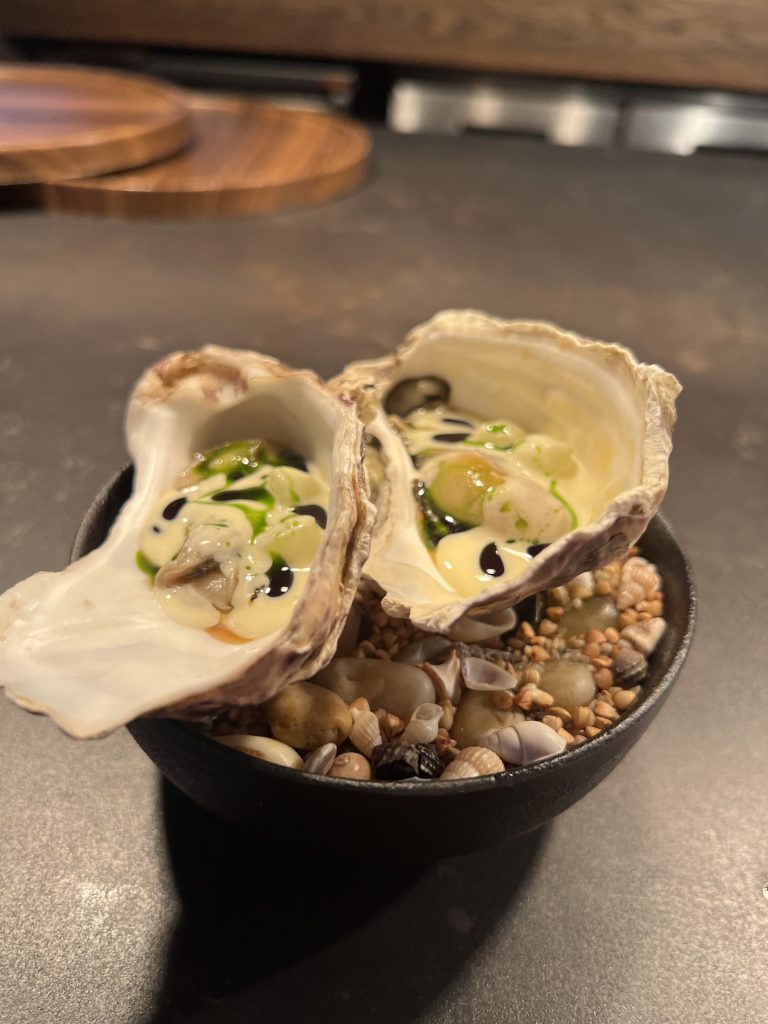
As an oyster lover, there was no chance I was going to visit Washington without trying oysters.
The Wharf is Washington’s waterfront district, and stopping for oysters here is as much about the setting as the food. Walk beside the Potomac, choose somewhere overlooking the water and settle in for oysters and a drink. It was 10 in the morning so there was no glass of wine.


It’s a completely different Washington from the museums and monuments around the National Mall.
Oysters have become something of a recurring theme on my travels, from Japan and Lisbon to London, Normandy and the United States. You can discover more in my Oyster Experiences Around the World article.
1100 Maine Ave SW, Washington, DC 20024
Momoyama
For Japanese food, we enjoyed Momoyama, a small and intimate Japanese restaurant in Washington DC.
After several days of museums, monuments and exploring different neighbourhoods, it was lovely to sit somewhere quieter and simply enjoy a good Japanese meal.
It was another reminder of how varied Washington’s food scene can be, from Hong Kong-inspired dishes at Tiger Fork and oysters beside the Potomac to Japanese food here.


Sometimes the restaurants you remember from a trip aren’t necessarily the most elaborate ones. They’re simply places where you ate well and enjoyed the moment.
231 2nd St NW, Washington, DC 20001
A Slow Day in Georgetown & Alexandria
One of the days I would particularly recommend recreating combines Georgetown and Alexandria.
Start in Georgetown, but don’t arrive with a long list of things to see.
Wander.
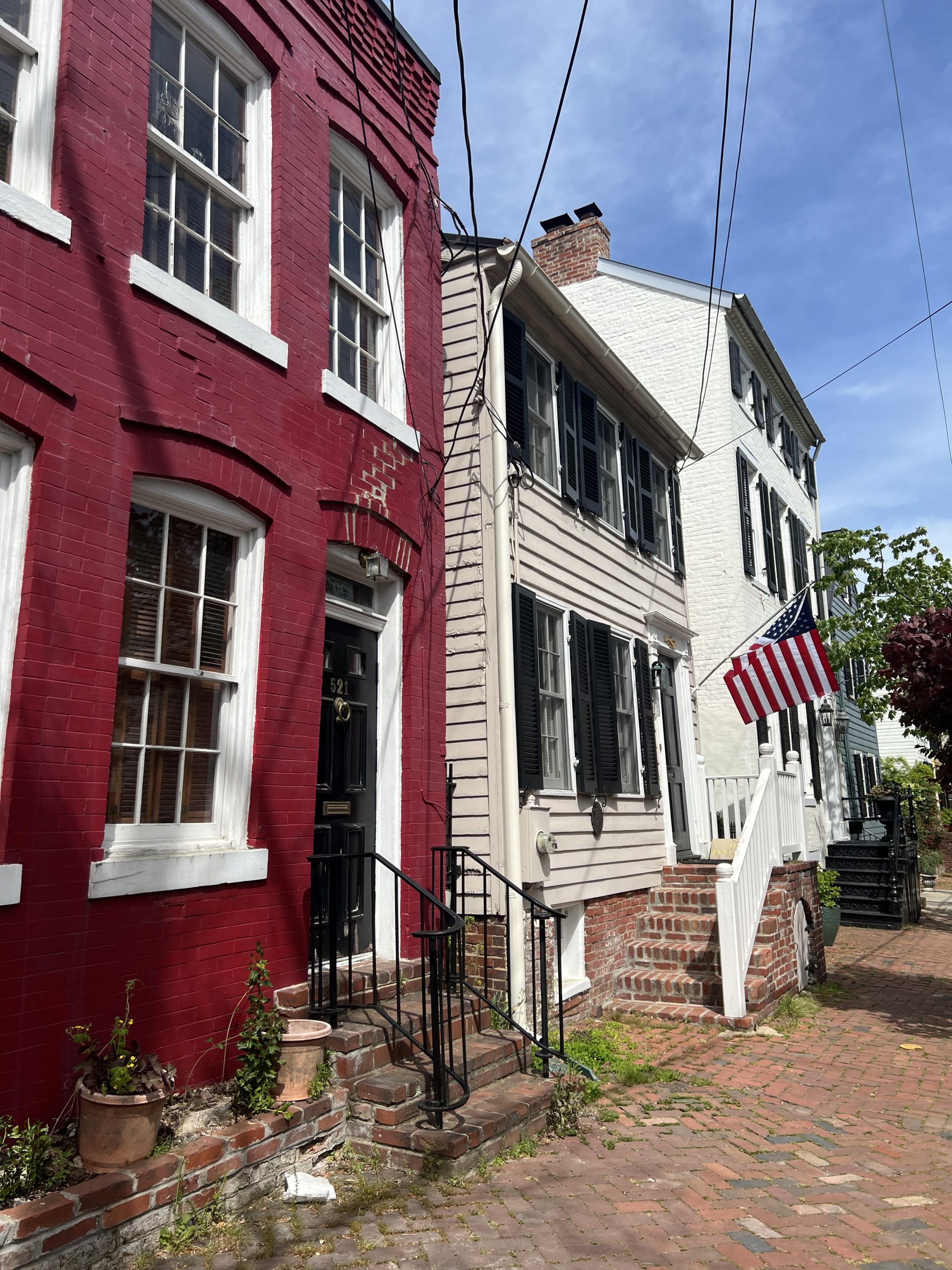
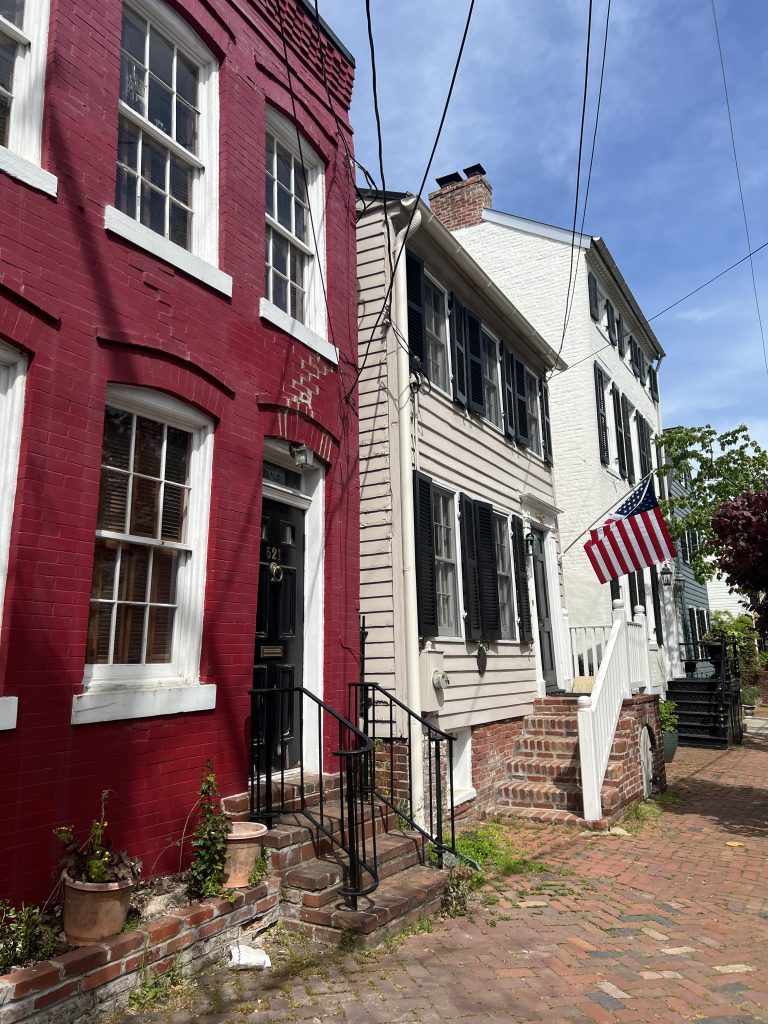
Look at the historic houses and architecture, explore the smaller streets and gradually make your way towards the waterfront.


Then let the journey become part of the day.
From the waterfront, have some oysters if you want, then take the boat along the Potomac towards Old Town Alexandria. Approaching Alexandria from the water makes it feel like a little escape from Washington rather than simply another sightseeing stop.


Once there, wander through the historic streets before heading back towards the river.


Ada’s on the River, Alexandria
Finish your Alexandria visit with a meal at Ada’s on the River.


Its waterfront location makes it particularly suited to this day. After arriving by boat and exploring Old Town on foot, sitting beside the Potomac for a meal feels like a natural continuation of the journey.
This is exactly the kind of travel day I love: one neighbourhood, a journey, some wandering and a good meal.
3 Pioneer Mill Way, Alexandria, VA 22314
Don’t Forget the Monuments
Of course, Washington’s famous monuments are worth seeing too.
The Capitol, Washington Monument, Lincoln Memorial and Martin Luther King Jr. Memorial are all extraordinary, but I wouldn’t necessarily organise them as another checklist.
Walk between them.
The National Mall gives you space between the monuments, museums and memorials, and that space is part of experiencing Washington.
The Martin Luther King Jr. Memorial was particularly powerful, while standing on the steps of the Lincoln Memorial and looking across the Reflecting Pool towards the Washington Monument gives you one of those unmistakable Washington views.
Some of my favourite moments in the city weren’t necessarily things we’d planned. They were what we discovered while walking from one place to another.


Where to Stay in Washington DC
I stayed with a friend while I was in Washington, so I can’t personally review a hotel from this trip.
However, my friend who lives in the city recommends two very different luxury hotels, and I’ve also included two smaller properties that I would consider myself if I were returning and wanted somewhere with more individual character.
Fairmont Washington, D.C., Georgetown
Best for: classic luxury close to Georgetown
The Fairmont is a good choice if you want the comfort and service of a luxury hotel while being well positioned for Georgetown, Dupont Circle and the West End.


Its location particularly appeals to me because Georgetown is somewhere worth exploring slowly rather than simply passing through.
2401 M St NW, Washington, DC 20037
Waldorf Astoria Washington DC
Best for: a special occasion and grand Washington architecture
For something altogether grander, the Waldorf Astoria occupies Washington’s historic Old Post Office building on Pennsylvania Avenue.
This is the option I would consider if the hotel itself were part of the occasion. Its central location is also particularly convenient for the National Mall and many of the museums in this guide.


1100 Pennsylvania Ave NW, Washington, DC 20004
Swann House
Best for: an intimate stay with character
If you prefer somewhere smaller, Swann House offers a very different experience.
Set in a historic mansion near Dupont Circle, this boutique bed and breakfast has individually decorated rooms and a much more residential atmosphere than a large city hotel.
This is more the kind of property I naturally gravitate towards: somewhere with personality that gives you a sense of being in the city rather than simply staying in a hotel.
Its location also lets you experience a quieter, more residential side of Washington while remaining within easy reach of the major museums and sights.


1808 New Hampshire Ave NW, Washington, DC 20009
The Tabard Inn
Best for: history, character and something unconventional
Another independent option near Dupont Circle is the Tabard Inn, which has been welcoming guests since 1922.
Rooms are individually decorated across historic townhouses, with vintage furnishings, original art and plenty of quirks. There are no televisions in the bedrooms, which somehow seems completely appropriate for the atmosphere.
There’s also a restaurant, lounge and garden patio, making it somewhere you can return to after sightseeing and actually spend some time.
It is a genuinely historic property, so don’t expect all the conveniences of a modern luxury hotel. But if you value individuality and atmosphere, that’s part of its appeal.


1739 N St NW, Washington, DC 20036
Washington DC, the Travelling Cooks Way
You could fit considerably more into four days in Washington DC.
But that’s rather the point.
You don’t have to.
Choose the museums that genuinely interest you. Spend an extra half hour in a sculpture garden. Take the boat instead of the quickest route. Stay for lunch. Sit beside the water with a plate of oysters.
Sometimes seeing less allows you to experience much more.
Slow down. Savour more. Reconnect.
Would you like a journey designed around you?
The best trips aren’t always about fitting more in. They’re about choosing the experiences that are right for you and leaving enough space to enjoy them.
Through Travelling Cooks Personalised Journey Design, I create thoughtful itineraries built around your interests, your pace and the way you want to travel.