
Berlin is a city that reveals itself slowly. At first it may seem a little rough around the edges, but spend a day walking its streets and you quickly discover its fascinating layers of history, creativity and culture.
Grand monuments sit beside colourful street art, elegant boulevards lead to lively neighbourhood cafés, and reminders of the Cold War appear unexpectedly between modern buildings.
What makes Berlin special is this contrast. It is a city that never tries to hide its past, yet constantly reinvents itself.
During a few days in Berlin we wandered through historic landmarks, explored vibrant neighbourhoods, discovered incredible street art and enjoyed the city’s lively café culture.
This article contains affiliate links. If you click through and make a booking or purchase, we may earn a small commission at no extra cost to you. Your support helps us keep Travelling Cooks alive and sharing more recipes and travel tips.
Here is how to spend 48 wonderful hours in Berlin.
Day 1, Berlin’s History and Iconic Landmarks
Start your visit in the historic centre where many of Berlin’s most important landmarks are located.
Brandenburg Gate
Begin your day at the Brandenburg Gate, the most famous monument in Berlin. Once a symbol of division during the Cold War, it is now one of the great symbols of German unity.


Reichstag
A short walk away is the impressive Reichstag Building. If you reserve in advance you can visit the spectacular glass dome which offers panoramic views across the city. It is worth booking a 2 hour tour with GetYourGuide if you want to know more about history, architecture, and politics.

Holocaust Memorial
Nearby is the powerful Memorial to the Murdered Jews of Europe. Walking through the field of concrete blocks is a moving and unforgettable experience.


Checkpoint Charlie
Continue towards Checkpoint Charlie, the most famous crossing point between East and West Berlin during the Cold War. Today you can see the reconstructed guardhouse and the sign that once greeted visitors with the words “You are leaving the American sector”.
Nearby you will also find the Checkpoint Charlie Museum, which tells remarkable stories of escape attempts from East Berlin.


Lunch suggestion
For a relaxed lunch head to Markthalle Neun, a lively indoor food market with excellent street food and local products.


East Side Gallery
In the afternoon visit the East Side Gallery, the longest surviving section of the Berlin Wall. Stretching for about 1.3 kilometres along the River Spree, this historic stretch of wall has been transformed into one of the world’s largest open air galleries.
Shortly after the Fall of the Berlin Wall, more than 100 artists from over 20 countries were invited to paint murals on the former border wall. Their artworks celebrate themes of freedom, hope and political change.
Today the East Side Gallery has become one of Berlin’s most visited landmarks. Walking along the wall you will see colourful paintings, powerful political messages and famous images such as the mural showing the kiss between Soviet leader Leonid Brezhnev and East German leader Erich Honecker.


Evening in RAW-Gelände
A short walk away you will find RAW-Gelände, a former railway yard transformed into a creative cultural space filled with graffiti covered buildings, bars, music venues and open air beer gardens.
It is one of the best places to experience Berlin’s alternative atmosphere and vibrant nightlife.


Dinner and Drinks with a View
Drinks on the Rooftop Terrace at Hotel de Rome
Start or finish with drinks on the Rooftop Terrace at Hotel de Rome. Located above Bebelplatz, the terrace offers panoramic views across Berlin’s historic centre, including the Berlin Cathedral, the State Opera and the city skyline.
CHIARO Restaurant & Bar
Located inside the elegant Hotel de Rome, CHIARO serves refined Italian cuisine in a beautiful historic setting in Berlin’s Mitte district. The restaurant blends traditional Italian cooking with modern touches and has quickly become one of the stylish dining spots in the city.


More ideas for guided tours in Berlin
Day 2, Museums, Neighbourhoods and Berlin’s Creative Side
Start your second day slowly with a proper Berlin brunch.
Brunch at Frühstück 3000
Berlin takes brunch seriously and Frühstück 3000 is one of the city’s most popular spots. Located in Schöneberg, the restaurant is known for creative dishes, beautiful presentation and excellent coffee.
Expect inventive plates such as brioche French toast, eggs with seasonal ingredients and colourful brunch combinations that are almost too pretty to eat. It is the perfect way to start a relaxed day exploring the city.


Museum Island
Start your morning at Museum Island, a beautiful group of world class museums set on an island in the River Spree.
The famous Pergamon Museum houses spectacular ancient architecture including the Pergamon Altar and the Ishtar Gate.
Berlin Cathedral
Just across the square is the magnificent Berlin Cathedral. Climb to the dome for wonderful views over the city.


Afternoon in Kreuzberg
Spend the afternoon exploring Kreuzberg, one of Berlin’s most vibrant and creative neighbourhoods. Known for its multicultural atmosphere, canals, cafés and alternative culture, Kreuzberg is also one of the best areas in the city to discover large-scale street art.
As you walk through the neighbourhood you will notice that entire buildings have been transformed into works of art.
One of the most striking murals is the monumental painting by Italian street artist Blu. Covering the full façade of a building, the artwork shows a surreal city collapsing into a vortex of buildings, vehicles and flying figures. It is one of Berlin’s most iconic murals and reflects the political and social themes often found in Blu’s work.
Another memorable piece is the colourful elephant mural painted by Case Maclaim, a member of the Ma’Claim Crew. The giant elephant appears beside a basketball court, decorated with intricate patterns and lifting a balloon shaped like the Earth, a playful yet thoughtful symbol of our connection to the planet.
Nearby you may also come across a dramatic mural of two enormous hands forming a mountain shape around a building façade. The scale of these murals is impressive and shows how street art has become part of Berlin’s urban identity.
Not far from Kreuzberg you will also find a powerful reminder of the city’s past near the Axel Springer Building. A sculpture shows a man standing on a fragment of the Berlin Wall, commemorating the events of the Fall of the Berlin Wall when people climbed the wall as East and West Berlin were reunited.
Walking through Kreuzberg feels a little like exploring an open air gallery where art, history and everyday city life blend together.


Evening in RAW-Gelände
A short walk away you will find RAW-Gelände, a former railway yard transformed into a creative cultural space filled with graffiti covered buildings, bars, music venues and open air beer gardens.
It is one of the best places to experience Berlin’s alternative atmosphere and vibrant nightlife.
Dinner at Burgermeister (Warschauer Straße)
After exploring the vibrant bars and street art of RAW-Gelände, end the evening with a relaxed dinner at Burgermeister, one of Berlin’s most famous burger spots.
Located near Warschauer Straße Station, Burgermeister started as a small street food stand and quickly became a local institution. Today it is known for its excellent burgers made with high-quality ingredients and served in a lively, informal setting (veggie option available).
Expect juicy burgers, crispy fries and a buzzing atmosphere filled with locals, students and travellers alike. After a day of exploring Berlin’s museums, neighbourhoods and street art, it is the perfect place to enjoy a casual and delicious dinner before diving back into the nightlife around Friedrichshain.


Getting Around Berlin, Public Transport and Costs

Berlin is a large city but getting around is very easy thanks to its excellent public transport system.
The network includes the underground U-Bahn, the overground S-Bahn, trams and buses, all operated by Berliner Verkehrsbetriebe.
The system is divided into three zones:
- Zone A, central Berlin
- Zone B, surrounding districts
- Zone C, outskirts and Potsdam
Most visitors only need zones A and B.
For a short stay, the best option is a 48 hour ticket, which costs roughly €19 to €20 and allows unlimited travel on all trains, trams and buses.
Tickets can be purchased at station machines or through the BVG Fahrinfo.
Berlin operates mostly on an honour system, meaning stations often have no ticket barriers, but inspectors regularly check tickets and fines are high.
Best Street Art Spots in Berlin
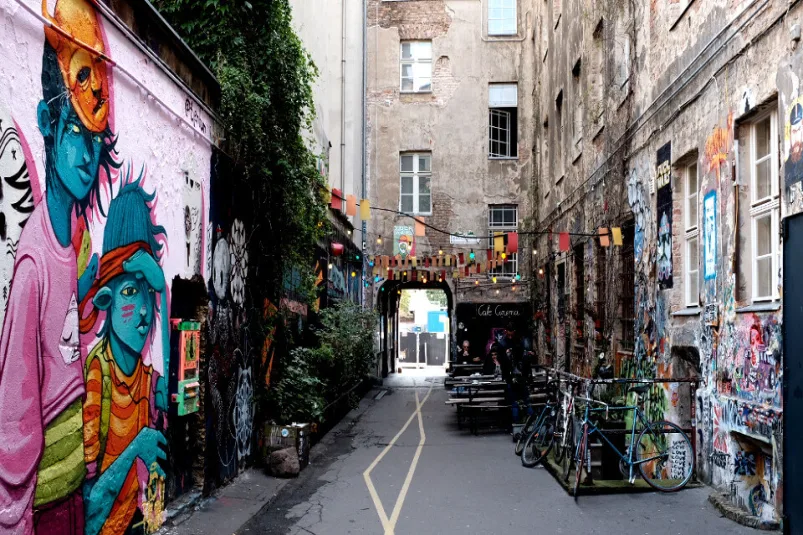
Berlin is one of Europe’s street art capitals. After the fall of the Berlin Wall, artists from around the world began transforming the city’s walls into an open air gallery.
Today you will find extraordinary murals and graffiti throughout many neighbourhoods.
Some of the best places to explore include:
East Side Gallery, the most famous street art location in the city.
RAW-Gelände, a creative complex full of graffiti, bars and cultural venues.
Haus Schwarzenberg, a hidden alley packed with colourful murals near Hackescher Markt.
And of course Kreuzberg, where enormous murals cover the sides of many apartment buildings.
3 Cafés You Should Not Miss in Berlin


Berlin has a wonderful café culture, from Scandinavian style brunch spots to hidden courtyard coffee houses.
House of Small Wonder
One of the most beautiful cafés in Berlin, famous for its green interior and relaxed atmosphere. The brunch menu blends European and Japanese influences.
Silo Coffee
A favourite among locals in Friedrichshain, known for excellent coffee and generous brunch plates.
Father Carpenter
Hidden in a quiet courtyard near Hackescher Markt, this café serves fantastic coffee and beautiful pastries.
Where to Stay in Berlin
If you only have two days, location matters.
The central district of Mitte is ideal for first time visitors because many major sights are within walking distance.
One of the city’s most iconic hotels are the Hotel Adlon Kempinski Berlin and the Hotel de Rome located right beside Brandenburg Gate.
For a more local atmosphere, consider staying in Kreuzberg or Prenzlauer Berg, where cafés, restaurants and small boutiques give you a taste of everyday Berlin life.
Final Thoughts
Berlin is not a city of postcard perfection. Its beauty lies in its contrasts.
It is a place where history and creativity exist side by side. Where monumental landmarks stand just a few streets away from graffiti covered walls and hidden cafés.
Spend a couple of days walking through its neighbourhoods, exploring its street art and enjoying its vibrant food scene, and you may find that Berlin slowly works its way under your skin.
It certainly did for us.